Vertical Blinds for Sliding Doors & Large Windows
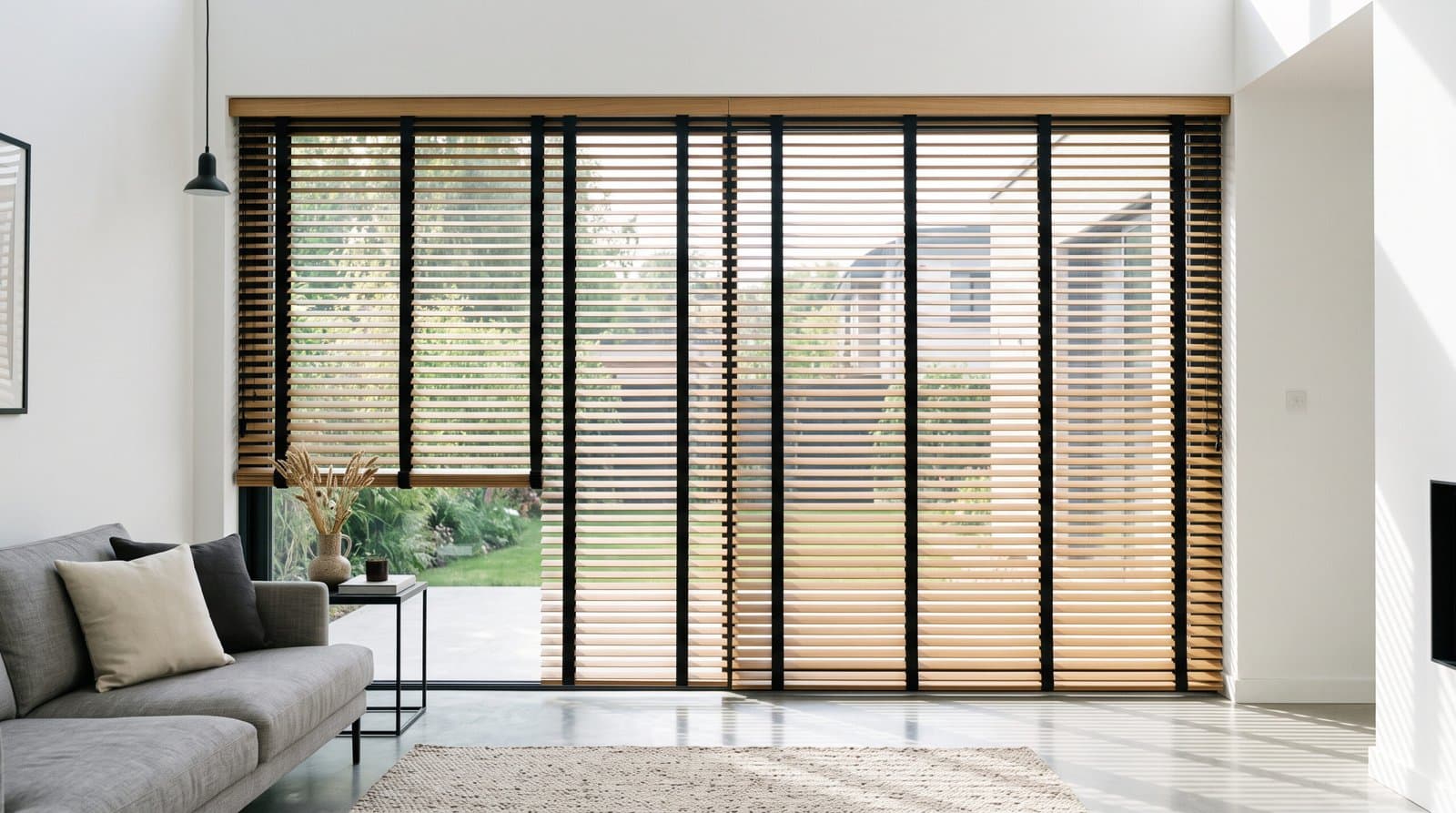
Choosing the right window coverings for sliding glass doors and large windows can make a big difference in your home’s comfort, privacy, and overall appearance. These windows often need a solution that is easy to operate while allowing you to control natural light and maintain access to outdoor spaces.
Vertical blinds for sliding doors are a popular option because their vertical slats can be adjusted to manage light and privacy. They can also be moved aside to provide access through a sliding door.
In this guide, we will explore the benefits of vertical blinds, explain what to consider when choosing them, and help you decide whether they are the right option for your home.
What Are Vertical Blinds?
Vertical blinds are window coverings made of individual vertical slats that hang from a track at the top of the window or door. The slats can be tilted to adjust incoming light and moved along the track to open or close the covering.
Unlike horizontal blinds, which use slats that run from side to side, vertical blinds have slats that run from top to bottom. This design makes them useful for covering wide windows and sliding glass doors.
Vertical blinds are available in different materials, colors, and styles. Choosing the right option depends on the size of your window, your preferred appearance, and how much light and privacy you need.
If you want to compare other window covering options, explore our window blinds guide.
Why Choose Vertical Blinds for Sliding Doors?
Sliding doors connect indoor spaces with patios, gardens, balconies, and other outdoor areas. Their size and frequent use can make choosing the right window covering important.
Vertical blinds offer several features that can work well for these spaces.
1. Convenient Access Through Sliding Doors
Sliding doors are often used throughout the day. Vertical blinds can be moved along their track to clear the doorway when you want to go outside or let fresh air into your home.
This design can make them a practical option for frequently used patio doors.
2. Coverage for Wide Glass Areas
Large sliding doors can include a substantial amount of glass. Vertical blinds are designed to cover wide openings, making them an option for homeowners who want a consistent look across a large glass surface.
Before purchasing, measure the full area you want to cover and check the product’s available sizes.
3. Adjustable Light Control
Direct sunlight through large windows can create glare and make a room feel uncomfortable at certain times of the day.
Vertical blinds allow you to tilt the slats to adjust incoming light. You can change their position as sunlight moves throughout the day.
The amount of light blocked depends on the slat material, spacing, angle, and overall design.
4. Greater Privacy
Large glass doors and windows can provide views outside, but they may also allow people outside to see into your home.
Vertical blinds can be adjusted to help limit outside views when privacy is needed. Consider the position of your windows, nearby homes, and the level of privacy you want at different times of the day.
5. Different Styles for Your Interior
Vertical blinds come in different colors and materials, making it easier to coordinate them with your furniture, walls, flooring, and other window treatments.
Neutral colors can complement many interior styles, while a contrasting color may create a more noticeable design feature.
Choose a finish that works with the room rather than focusing only on the window covering itself.
Vertical Blinds for Large Windows
Large windows can bring natural light into a room and provide views of the outdoors. However, they can also create challenges when you need privacy or want to manage direct sunlight.
Vertical blinds can be worth considering for wide living room windows, large glass panels, and other openings where a vertical design suits the space.
Covering Wide Windows
For a wide window, consider how the blinds will look when fully closed and how much space they will occupy when opened.
Measure the window carefully and confirm that the selected track and slats are suitable for its dimensions.
Managing Sunlight and Glare
If sunlight enters your room directly, adjustable slats can help you change the direction of incoming light. This may be useful in living rooms, dining areas, and spaces where glare affects television viewing or other daily activities.
Different materials provide different levels of light filtering, so check the product details before choosing.
Maintaining a Balanced Appearance
The window covering should complement the size and style of the room. Consider the color of the slats, the track design, and how the blinds will look alongside nearby furniture and decor.
For especially wide or tall windows, check the product’s size limitations and operating instructions to make sure the selected option is suitable.
What Materials Are Available for Vertical Blinds?
The material affects the appearance, maintenance, and light-filtering properties of vertical blinds. Available choices vary by product, so review the manufacturer’s specifications before deciding.
Fabric Vertical Blinds
Fabric vertical blinds can provide a softer appearance than some other materials. Depending on the fabric, they may allow filtered light into the room or offer greater light control.
They can work well in living rooms and other spaces where you want the window covering to complement a comfortable interior style.
Vinyl Vertical Blinds
Vinyl vertical blinds offer another option for sliding doors and large windows. Their suitability, cleaning requirements, and appearance depend on the specific product.
Check the care instructions to understand how to remove dust and marks without damaging the slats.
Other Available Materials
Some vertical blind collections may offer additional materials or finishes. Compare the available options based on appearance, light control, maintenance, and compatibility with your window dimensions.
Before choosing a material, consider how frequently the blinds will be operated and whether they are exposed to direct sunlight, dust, or other environmental conditions.
How to Choose Vertical Blinds for Sliding Glass Doors
Choosing the right blinds involves more than selecting a color. Consider the following factors before making a purchase.
1. Measure the Door or Window
Accurate measurements help you choose blinds that fit the opening. Measure the width and height according to the manufacturer’s instructions.
Also consider the door handles, surrounding trim, and any obstacles that could affect the blinds’ movement.
If you are unsure how to measure your windows, follow a suitable measuring guide before ordering.
2. Consider How Often You Use the Door
If your sliding door is used frequently, consider how easily the blinds move aside and whether their operation suits your daily routine.
Make sure the selected design allows the door to be accessed as intended.
3. Decide How Much Light You Want
Think about whether you want filtered daylight, reduced glare, or greater privacy. Different slat materials and designs provide different results.
Review the product information carefully instead of assuming that all vertical blinds block the same amount of light.
4. Match the Blinds to Your Room
Consider your room’s wall colors, furniture, flooring, and overall style. A coordinated finish can help the window covering fit naturally into the space.
If you have multiple large windows in one area, consider how the blinds will look together.
5. Check Cleaning and Maintenance Needs
Dust and dirt can collect on window coverings over time. Check the recommended cleaning method for your chosen material and consider whether it fits your maintenance routine.
Use suitable cleaning tools and follow the manufacturer’s instructions.
6. Review the Operating System
Check how the blinds open, close, and tilt. Make sure the operating system is appropriate for the size and location of your window or door.
For wide installations, review the manufacturer’s product specifications and any recommendations for installation.
Vertical Blinds vs. Other Window Coverings
Vertical blinds are not the only option for sliding doors and large windows. Depending on your needs, other window coverings may also be worth considering.
Horizontal blinds: These use horizontal slats and may suit smaller or differently shaped windows. Consider how their operation will work with your particular opening.
Roller shades: These use a fabric panel that rolls up or down. They provide a different appearance from vertical blinds and are available in different light-filtering options.
Woven wood shades: These can add natural texture to a room. Their appearance and light-filtering properties depend on the material and construction.
Curtains and drapery: These can provide a softer decorative look and come in different fabrics and levels of light control.
The best option depends on the window dimensions, how you use the door, your privacy needs, and the interior style you prefer.
You can also read our guide to woven wood shades and their natural texture to explore another style of window covering.
How to Care for Vertical Blinds
Regular maintenance can help keep your vertical blinds looking clean and operating as intended.
- Remove dust regularly: Use a suitable duster or cleaning tool recommended for the material.
- Clean according to the product instructions: Fabric, vinyl, and other materials may require different cleaning methods.
- Operate the blinds gently: Avoid pulling or forcing the slats and track.
- Check the track and controls: If movement becomes difficult, follow the manufacturer’s guidance rather than forcing the mechanism.
- Address marks carefully: Use only suitable cleaning products and methods for the selected material.
Following these steps can help you maintain the appearance of your blinds over time.
Explore Window Blinds at Venus Blinds
Vertical blinds can be a practical option for sliding glass doors and large windows when you want adjustable light control, privacy, and convenient access through the doorway.
Before choosing, consider your window measurements, preferred material, room design, and maintenance requirements. Comparing different window covering styles can also help you find an option that suits your home.
Explore the window blinds collection at Venus Blinds to review available options for your windows. Choose a style that fits your space and meets your everyday needs.
Frequently Asked Questions
1. Are vertical blinds good for sliding doors?
Vertical blinds can be a good option for sliding doors because their slats can be tilted and moved along a track. This allows you to adjust light and privacy while clearing the doorway when needed.
2. Are vertical blinds suitable for large windows?
Yes, vertical blinds can be suitable for wide windows and large glass areas. Check the available sizes and product specifications to make sure the selected blinds fit your window.
3. Do vertical blinds provide privacy?
Vertical blinds can help limit outside views when their slats are adjusted. The level of privacy depends on the slat material, spacing, angle, and lighting conditions.
4. Can vertical blinds reduce sunlight and glare?
Tilting the slats can help manage incoming sunlight and reduce glare. The result depends on the material, slat design, and direction of the sunlight.
5. How do I clean vertical blinds?
The correct cleaning method depends on the material. Use a suitable duster or cleaning method recommended by the manufacturer, and avoid products that may damage the slats.
6. Are vertical blinds better than roller shades for sliding doors?
It depends on your preferences and how you use the door. Vertical blinds move sideways along a track, while roller shades move up and down. Compare access, appearance, light control, and maintenance before choosing.
7. Where can I find window blinds for large windows?
You can explore the window blinds collection at Venus Blinds to compare available styles for large windows and sliding doors.